 Burrowkit
Claude FinOps
Find out why your Claude Code bill is so high. A local dashboard that tells you what you spent, why it cost that much, and what to change.
npx claude-finops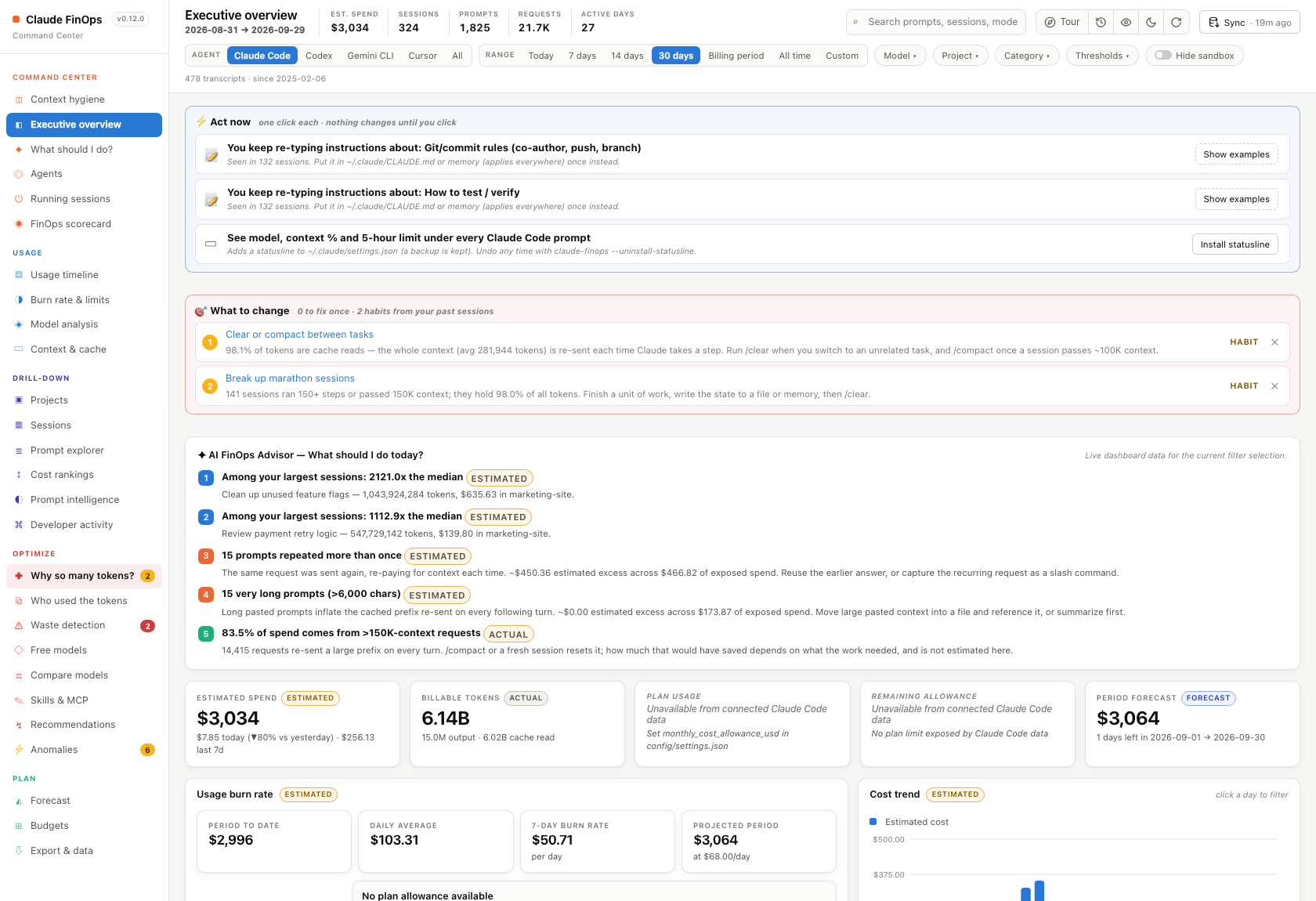
What I used → what it cost → why → what to change
It answers all four in a few clicks, using transcripts Claude Code has already written.
It acts, not just reports
The overview opens with one-click actions that apply to you right now: compact a session carrying too much context, turn a command you keep re-running into a skill, or move an instruction you keep re-typing into CLAUDE.md. Below that, "What to change" lists each fix with the evidence behind it, labelled Fix once or Habit.

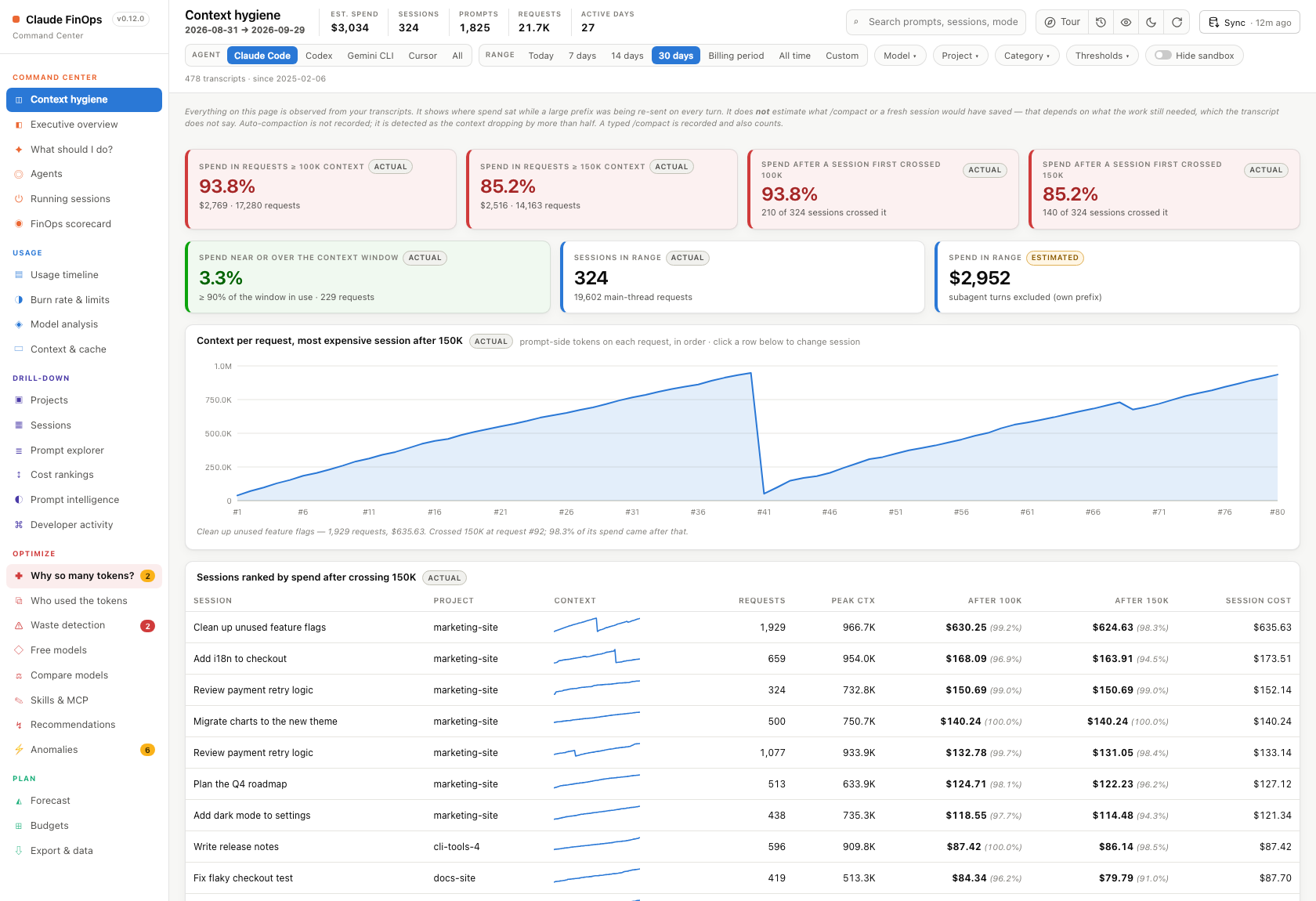
The biggest driver of your bill, measured
Almost all of a Claude Code bill is re-reading context. This shows how much of your spend happened above 100K and 150K tokens of context, and which sessions kept going long after they crossed that line, colour-graded so the problem areas stand out.
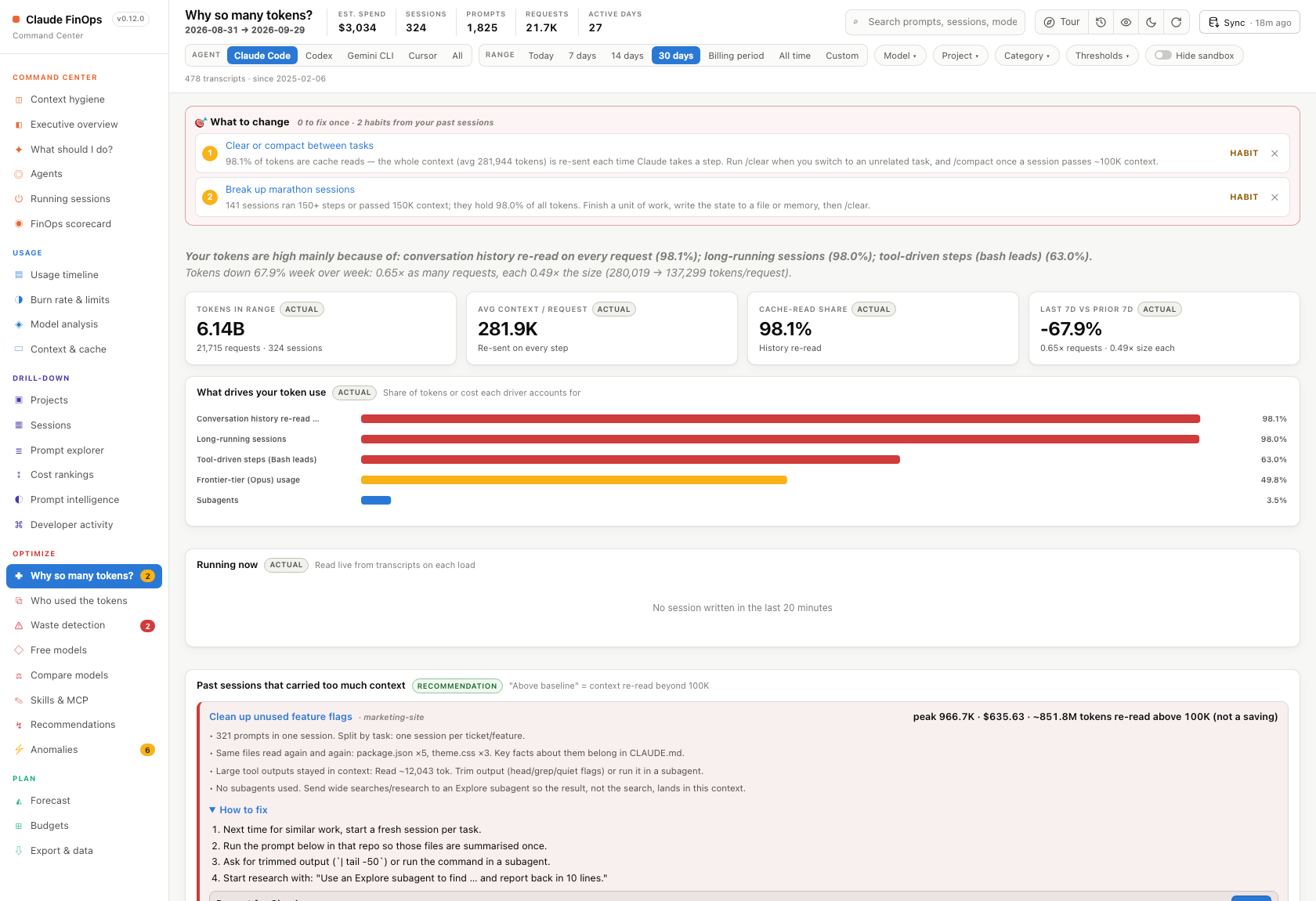
Why so many tokens?
It explains where your tokens actually went and gives you a prompt you can paste straight into Claude Code to fix it.
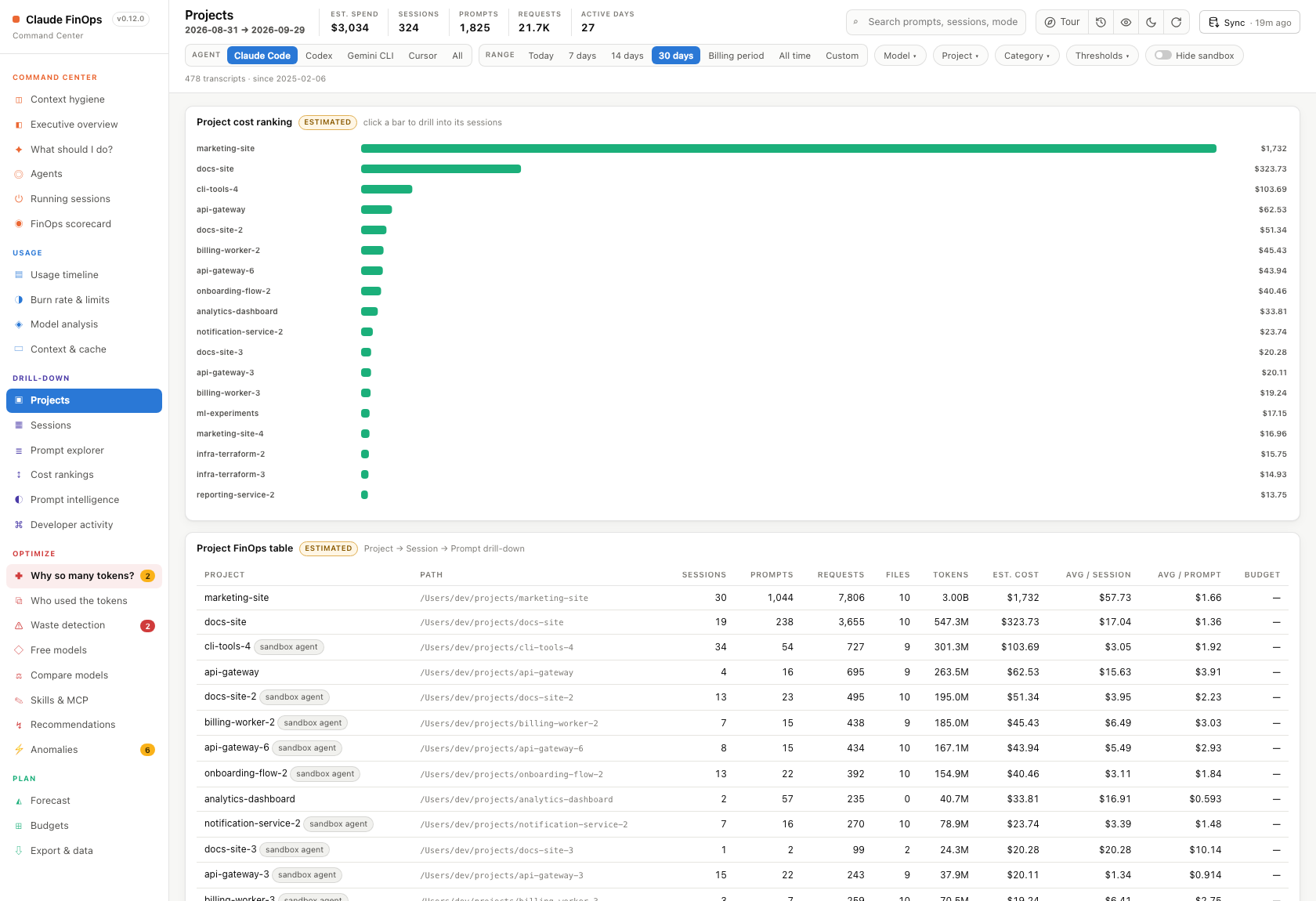
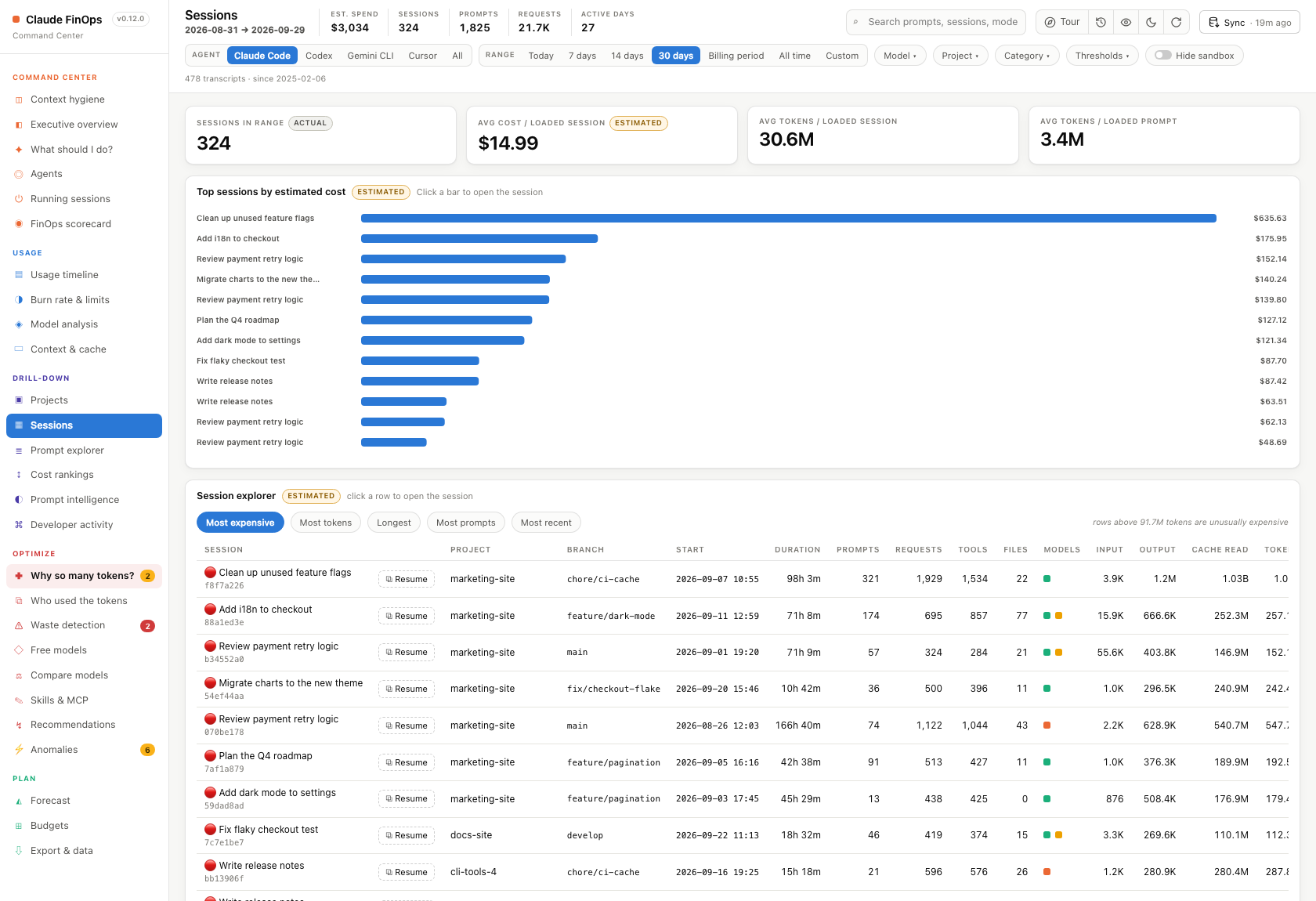
Where the money goes, per project
Every project is ranked by cost. Click through from project to session to the individual prompt and Claude's reply to it.
Resume any session in one click
Every session shows its cost, duration, branch and models. Resume copies claude --resume for that session, and a session that is still running gets Compact and Set limit buttons, plus Prompts to see what it was asked and Rename to give it a name. Click the name of a running session to see what fills its context. Press R on any page to open Recent: running sessions with Resume, Compact and Stop, then your past sessions and their prompts.
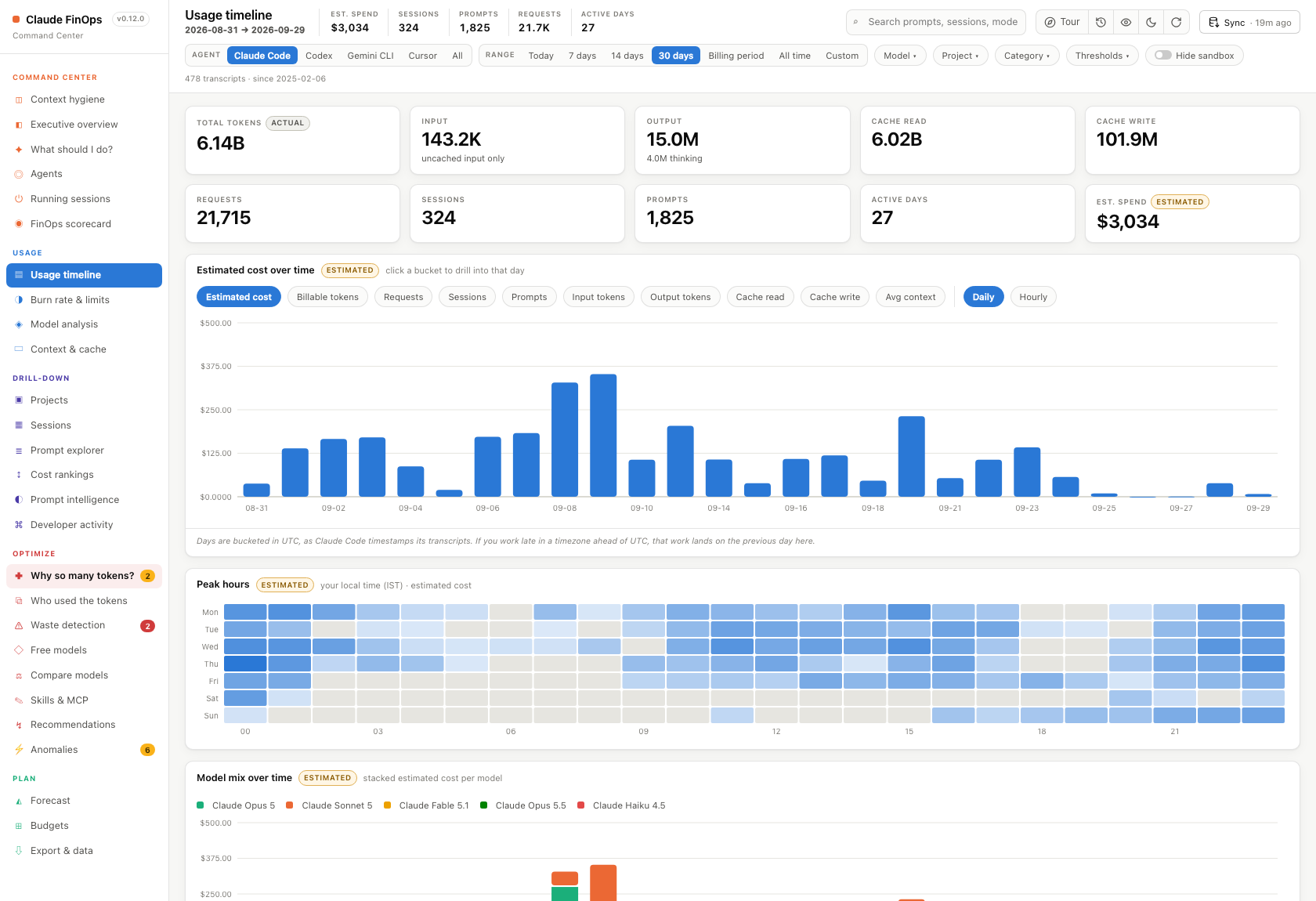
When you spend, in your own time zone
A daily cost timeline you can drill into, plus a weekday × hour heatmap of your peak hours in local time. Burn rate & limits also charts your 5-hour and weekly plan-limit history from the Claude desktop app.
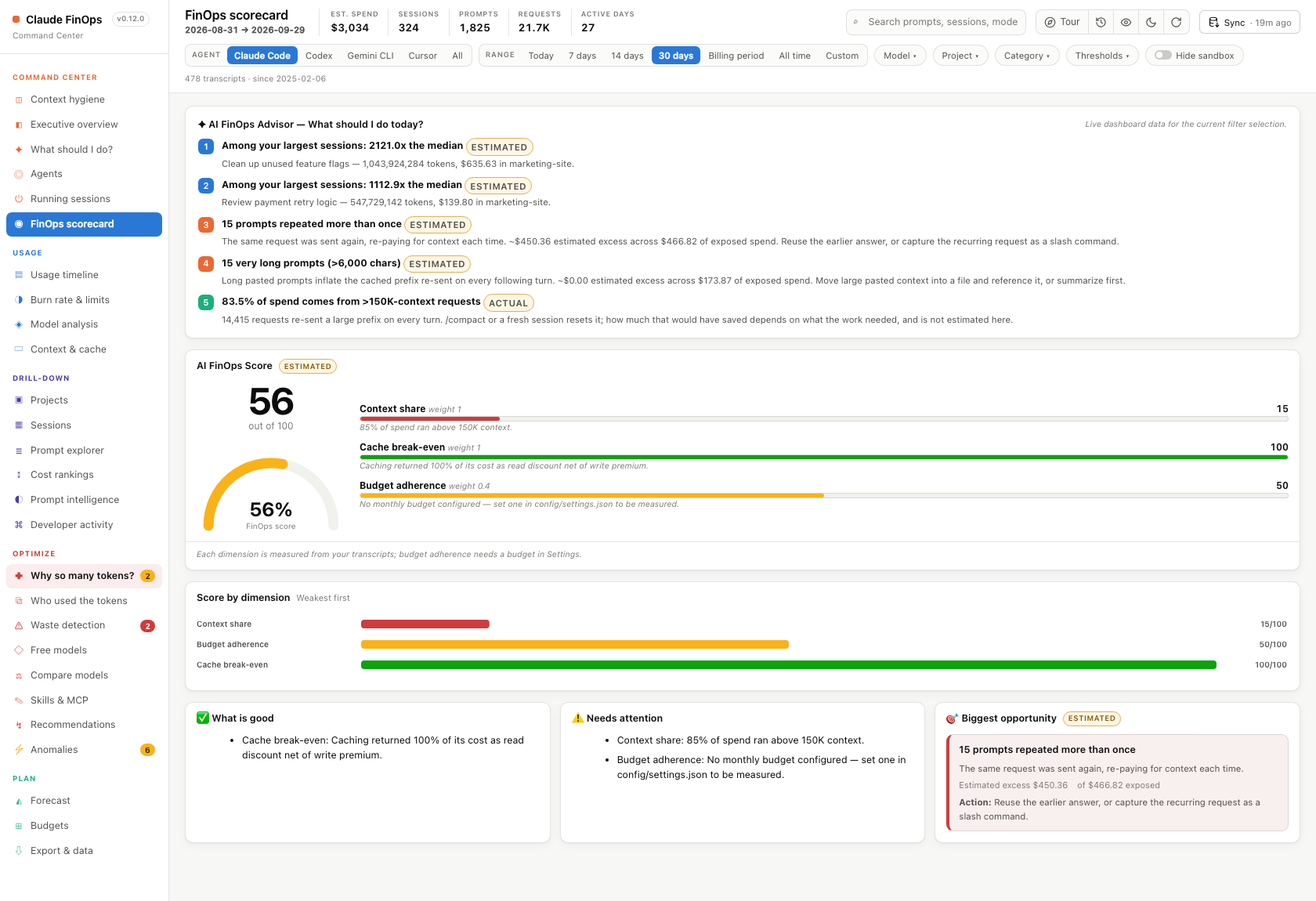
A scorecard with the reasoning shown
Your usage is scored on dimensions measured from your transcripts, and each score explains why it is what it is. A Plan fit card says whether your plan is the right size, and why.
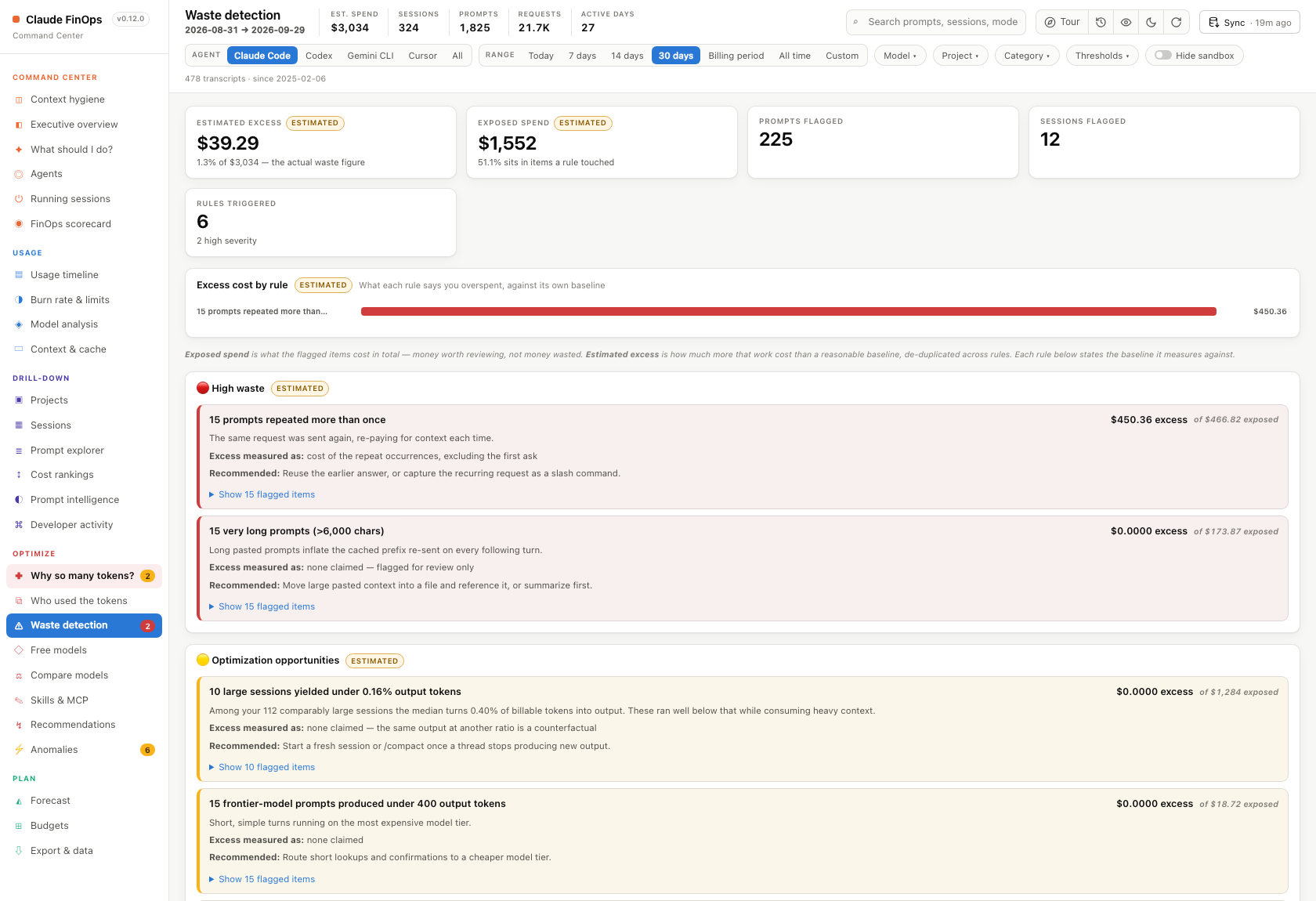
Waste you can act on
It flags repeated prompts, very long prompts (yours or a script's), and sessions that stopped producing output, with real counts and the exact prompts and sessions behind each finding. Subagent models shows which subagents could run on a cheaper model, measured from your own runs.
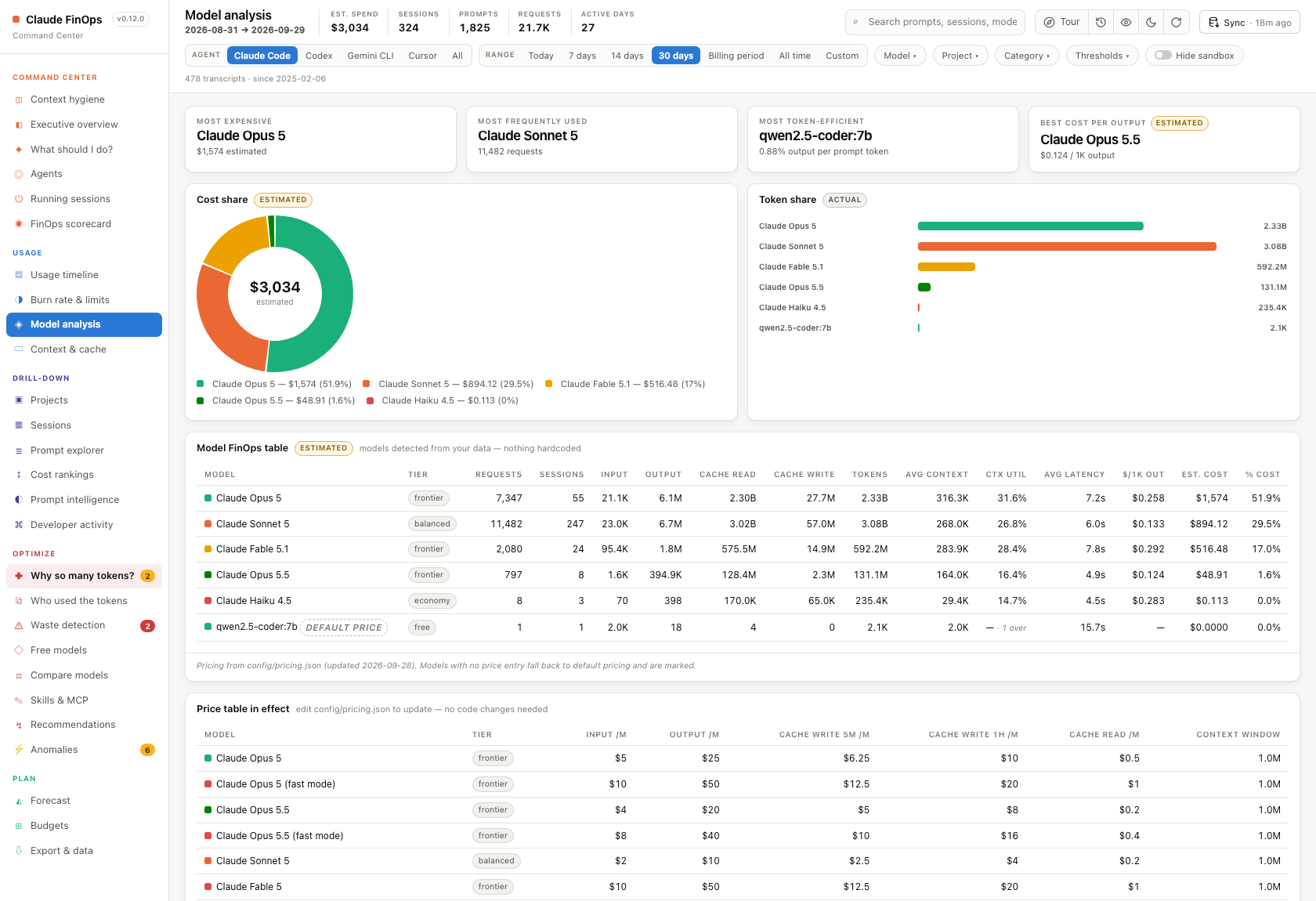
What each model really cost you
Cost and efficiency for each model, measured on your own work. It compares actual usage and never reprices your history at another model's rates.
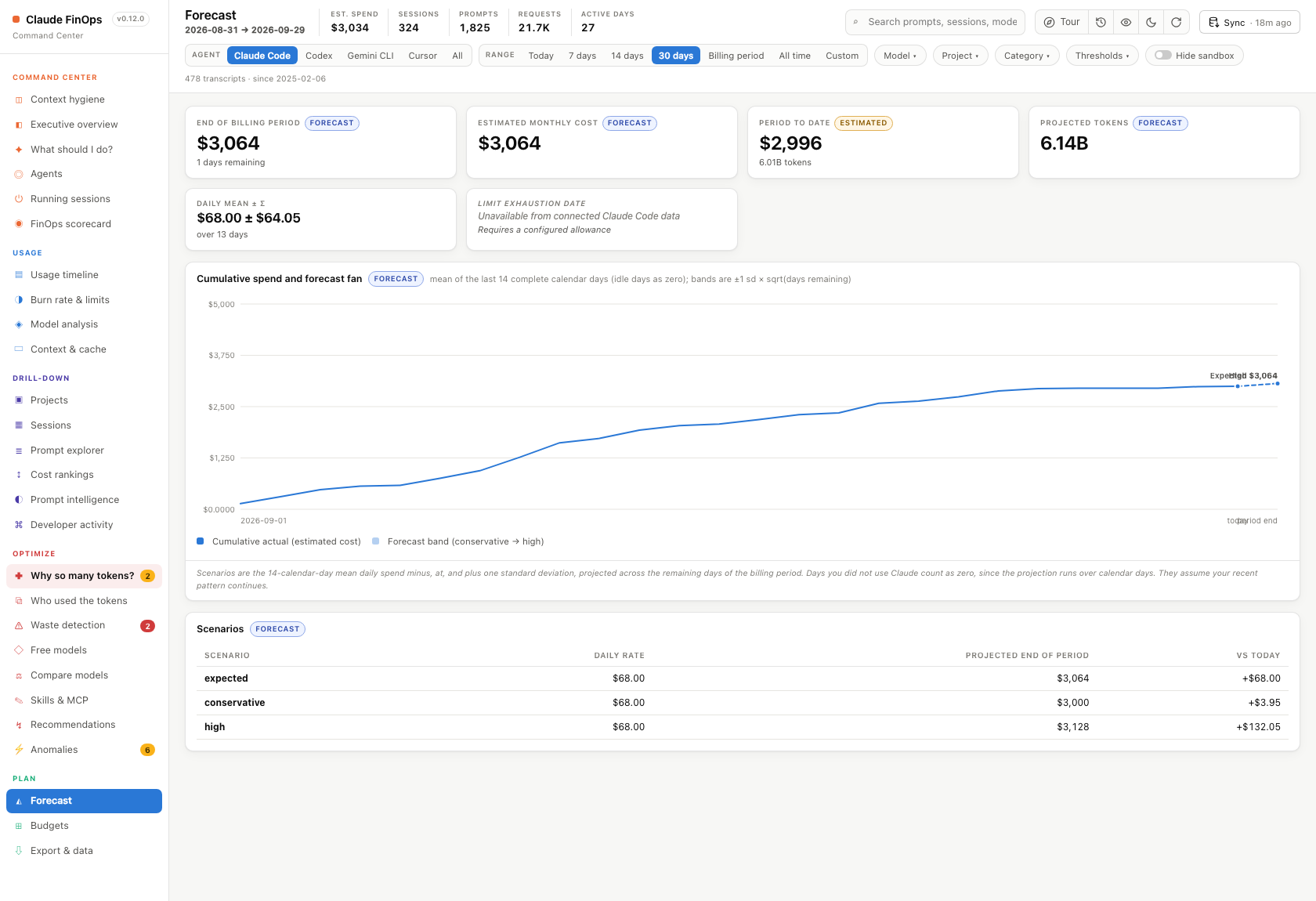
Where this month is heading
Conservative, expected and high forecasts for the billing period, built from your own history and compared against budgets you set. Set money, token and per-conversation limits in three simple steps, with suggestions from your own spending and a picture guide.
Why it is easy to use
One command
Just npx claude-finops. No API key, no sign-up, no config file.
No dependencies
Pure Python standard library. There is nothing to pip install and nothing to build.
Your data stays put
It binds to 127.0.0.1. The warehouse lives in ~/.claude-finops.
Nothing to learn
Every screen states its conclusion in plain English before it shows you a chart.
Claude desktop too
It also reads the Claude desktop app's Cowork sessions when it is installed.
Export anything
CSV and JSON for every view, plus a printable PDF report.
The accuracy contract
Every figure in the UI carries one of four badges. Anything that isn't in your transcripts is shown as unavailable rather than guessed.
| Actual | Read straight from your transcripts: tokens, timestamps, models, tool calls, files. |
| Estimated | Derived. Every dollar figure is estimated from tokens × the published price table. |
| Forecast | Projected from your own history, assuming the recent pattern continues. |
| Recommendation | Grounded in an observed share of spend. No invented saving is attached. |
See your own numbers in 60 seconds
You need macOS, Windows or Linux, Python 3.9+, and Claude Code used at least once. There's nothing else to install.
npx claude-finops